
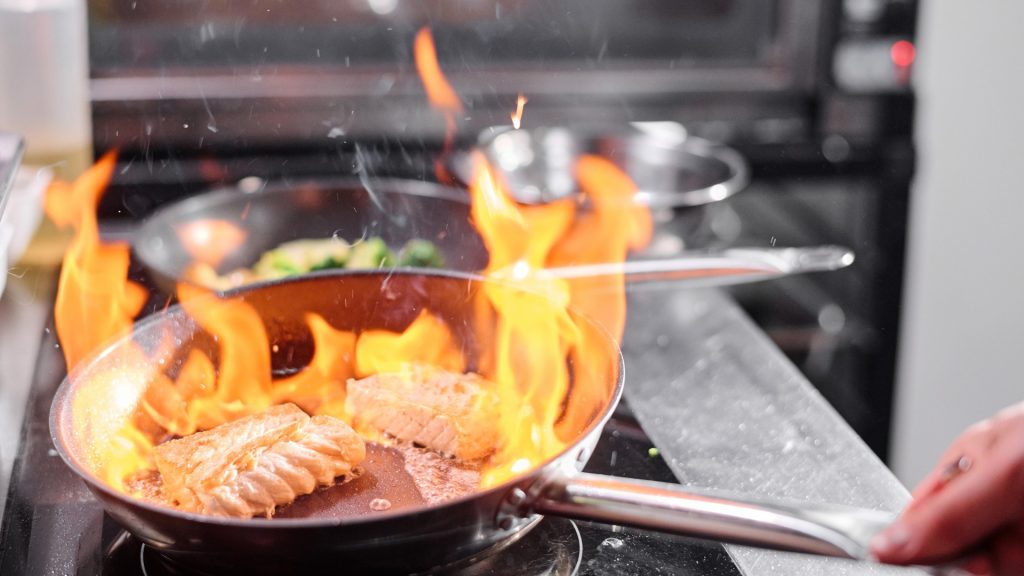
The fire is out. The fire department has left. You are standing in your kitchen staring at a blackened stove, scorched cabinets, and a layer of greasy soot on everything within twenty feet. Your first instinct is to start cleaning. Open the windows. Grab a bucket and some soap. Get your home back to normal as fast as possible.
That instinct, while understandable, can make things significantly worse.
Kitchen fires are one of the most common types of house fires in Michigan. Most are small enough that the fire department can contain them quickly. But even a fire that lasted only a few minutes creates damage that extends far beyond the visible burn area. Smoke, soot, water from extinguishing efforts, and chemical residue spread through your home in ways that are not obvious to the naked eye.
The restoration process after a kitchen fire involves steps that most homeowners have never heard of. Knowing what they are, and what order they need to happen in, can be the difference between a full recovery and months of lingering problems.
The Damage You Can See Is Not the Whole Story
A kitchen fire that stays confined to the stovetop or a single cabinet might look manageable. The charred area is small. The rest of the kitchen looks dirty but intact. It is tempting to assume the damage stops where the flames stopped.
It does not.
When cooking oils, plastics, synthetic fabrics, and treated wood burn, they produce thick smoke loaded with acidic particles. That smoke does not stay in the kitchen. It follows air currents through doorways, down hallways, into bedrooms, and up into the attic. It gets pulled into your HVAC system and distributed to every room with a vent. Within hours of a kitchen fire, soot can be found on surfaces two or three rooms away from where the flames actually were.
This smoke residue is not just unsightly. It is chemically active. Soot from a kitchen fire is typically “wet” soot, meaning it contains grease and oil from cooking materials. Wet soot is sticky, smears easily when wiped, and bonds to surfaces quickly. If it is not professionally removed within 48 to 72 hours, it can permanently stain drywall, discolor paint, etch metal fixtures, and yellow plastic surfaces like light switch covers and outlet plates.
The acid in smoke residue also corrodes electronics. Computers, televisions, and appliances in rooms that seem untouched by the fire can suffer internal damage from soot that settled on circuit boards and wiring.
Water Damage From the Fire Department
Here is something most Michigan homeowners do not think about until it happens: the water used to put out your kitchen fire can cause as much long-term damage as the fire itself.
Firefighters use a significant amount of water even on small kitchen fires. That water soaks into flooring, seeps under cabinets, saturates drywall, and pools in subfloor cavities. In Michigan homes with basements, water can drain down through the floor and create standing water below.
If that water is not extracted and the affected areas are not professionally dried within 24 to 48 hours, mold growth becomes a serious risk. Michigan’s climate, particularly the humidity that builds from late spring through early fall, accelerates mold development. A damp subfloor in July can produce visible mold colonies in under 72 hours.
This is why fire restoration and water restoration often go hand in hand. Addressing the fire and smoke damage without also addressing the water damage leaves your home vulnerable to a secondary problem that can be just as expensive and disruptive as the fire itself.
Do Not Clean Anything Yet
The single biggest mistake homeowners make after a kitchen fire is attempting to clean up before the insurance adjuster has inspected the property and before a professional restoration team has assessed the full scope of damage.
There are two reasons this matters.
First, amateur cleaning often makes smoke and soot damage worse. Wiping soot with a regular household cloth or sponge pushes the oily residue deeper into porous surfaces. Using water on soot-covered drywall can cause permanent staining that would have been removable with the correct dry-cleaning sponge or chemical treatment. Spraying air freshener to mask smoke odor does nothing to address the source of the smell and can actually interfere with professional deodorization later.
Second, cleaning up before documenting the damage can hurt your insurance claim. Your insurance company needs to see the full extent of the loss. If you scrub walls, throw away damaged items, or remove charred materials before an adjuster reviews the scene, you may inadvertently eliminate evidence of damage that would have been covered under your policy. Photograph and video everything before anyone touches it.
The one exception is temporary protective measures. Michigan insurance policies generally require homeowners to take reasonable steps to prevent further damage. That means boarding up a broken window, placing a tarp over a damaged section of roof, or turning off the water supply if pipes were affected. These steps are covered under most standard homeowners policies, so keep your receipts.
The Professional Restoration Process
A proper kitchen fire restoration follows a specific sequence. Skipping steps or doing them out of order leads to incomplete results.
Assessment and documentation. A qualified restoration company will walk through the entire home, not just the kitchen, to identify every area affected by fire, smoke, soot, and water. They will check inside cabinets, behind appliances, inside HVAC ductwork, in the attic, and in rooms you might not expect to be affected. This assessment becomes part of the documentation your insurance company uses to process the claim.
Water extraction and drying. If the fire department used water to extinguish the fire, the restoration team addresses that first. Standing water is extracted. Moisture meters and thermal imaging cameras are used to identify water trapped behind walls or under flooring. Industrial air movers and dehumidifiers are placed to dry the structure thoroughly. In Michigan basements, which tend to retain moisture, this step is especially critical.
Soot and smoke residue removal. Professional technicians use specialized techniques depending on the type of soot present. Wet soot from kitchen fires requires different cleaning agents and methods than dry soot from a wood-burning fire. Restoration teams use dry-cleaning sponges, chemical sponges, and professional-grade cleaning solutions to lift residue from walls, ceilings, and hard surfaces without driving it deeper into the material.
HVAC cleaning. If your furnace or air conditioning system was running during the fire, or if it has run at any point since, smoke and soot particles have circulated through your ductwork. A full HVAC cleaning, including ducts, filters, coils, and the blower motor, is necessary to prevent soot from continuously recirculating through your home. Many homeowners skip this step and then wonder why their house still smells like smoke weeks later.
Odor elimination. Masking a smoke smell is not the same as removing it. Professional restoration companies use thermal fogging, ozone treatments, or hydroxyl generators to neutralize smoke odor at the molecular level. The right method depends on the severity of the smoke damage and the materials affected. This step often needs to happen after cleaning is complete, because residual soot will continue to produce odor if it has not been fully removed.
Contents cleaning and restoration. Clothing, upholstery, documents, electronics, and personal belongings affected by smoke may be salvageable through professional cleaning processes. An experienced restoration company will separate items into categories: those that can be cleaned on-site, those that need off-site specialized cleaning, and those that are beyond recovery. This inventory also supports your insurance claim.
Structural repair. Once the space is clean, dry, and free of odor, the actual rebuilding begins. Damaged drywall, cabinetry, flooring, countertops, and fixtures are replaced. Electrical wiring in the burn area is inspected and replaced if compromised. Any structural elements that were weakened by heat need professional evaluation.
What Michigan Homeowners Should Know About Insurance
Most standard homeowners insurance policies in Michigan cover fire and smoke damage, including damage caused by water used to fight the fire. But navigating the claims process after a kitchen fire has some details that catch people off guard.
Your insurer must tell you what documentation they need to process your claim within 30 days of receiving it. You will likely be asked to submit a proof of loss, which is a formal document itemizing the damage and its value. Many Michigan policies require this proof of loss within 60 days of it being requested. Do not let that deadline sneak up on you.
Under Michigan law, once your insurer receives a completed proof of loss, they must pay the claim within 60 days. If they fail to pay within that window, the overdue amount begins accruing interest at 12 percent annually. That is a strong incentive for timely payment, but only if you have submitted your documentation correctly and on time.
One coverage gap that surprises many homeowners is ordinance or law coverage. If your kitchen was built decades ago and the current Michigan Building Code requires upgrades during reconstruction, those upgrades may not be covered under a standard policy. Think updated electrical wiring, additional smoke detectors, or changes to ventilation requirements. Many policies include ordinance or law coverage as an add-on, typically capped at 10 percent of your dwelling coverage. Check your declarations page or call your agent to find out whether you have it.
Also worth knowing: Michigan participates in a fire insurance withholding program. In certain municipalities, if fire damage exceeds 49 percent of the insured value of the real property, the insurance company may be required to hold a portion of the settlement in escrow with the local government until repairs are completed. This program exists to prevent homeowners from collecting insurance money and leaving a damaged structure unrepaired. It does not apply to every city or township, but if your municipality participates, it can affect how quickly you receive your full payout.
If you have questions or concerns about how your claim is being handled, the Michigan Department of Insurance and Financial Services (DIFS) accepts complaints and can investigate on your behalf. You can reach them at 1-877-999-6442 or file a complaint online at michigan.gov/DIFS.
Older Michigan Homes Carry Extra Risks
Michigan has a large stock of older homes, particularly in the metro Detroit area, the west side of the state, and throughout smaller towns and cities. Many of these homes were built before 1980 and may contain materials that create additional hazards during fire restoration.
Asbestos was commonly used in insulation, floor tiles, and joint compound until the late 1970s. Lead-based paint was standard in homes built before 1978. Under normal conditions, these materials pose little risk. But fire, heat, and the demolition required for restoration can disturb them, releasing asbestos fibers or lead particles into the air.
A reputable restoration company will assess for these hazards before beginning tear-out work. If asbestos or lead is present, specialized abatement procedures are required under both federal EPA regulations and Michigan Department of Environment, Great Lakes, and Energy (EGLE) guidelines. This is not optional. It is a legal requirement, and it protects the health of everyone in the home.
Protect Yourself Before a Fire Happens
A few simple steps can limit the damage if a kitchen fire ever occurs in your Michigan home.
Make sure your smoke detectors are working. Michigan law requires smoke alarms on every level of a residential dwelling and outside each sleeping area. Test them monthly and replace batteries at least once a year.
Keep a fire extinguisher in or near the kitchen. A Class B extinguisher rated for grease fires is the right choice. Know where it is and how to use it before you need it.
Review your homeowners insurance policy annually. Confirm that your coverage reflects the current replacement cost of your home, not the value from when you first bought the policy. Ask your agent about ordinance or law coverage if you do not already have it.
And if a fire does happen, resist the urge to handle it yourself. The damage from a kitchen fire is almost always more extensive than it looks, and the restoration process requires equipment, training, and expertise that go far beyond what any homeowner can do with a mop and a can of paint.
Call EzDry
At EzDry, we respond to fire, smoke, and water damage calls 24 hours a day, 7 days a week across Michigan. Our IICRC-certified technicians handle everything from water extraction and structural drying to soot removal and full restoration. We also work directly with your insurance company to document the damage and coordinate the claims process so you do not have to manage it alone.
If your kitchen has been through a fire, call us at (248) 788-6422. We will assess the damage, explain your options, and get the restoration process started before the damage has a chance to get worse.