
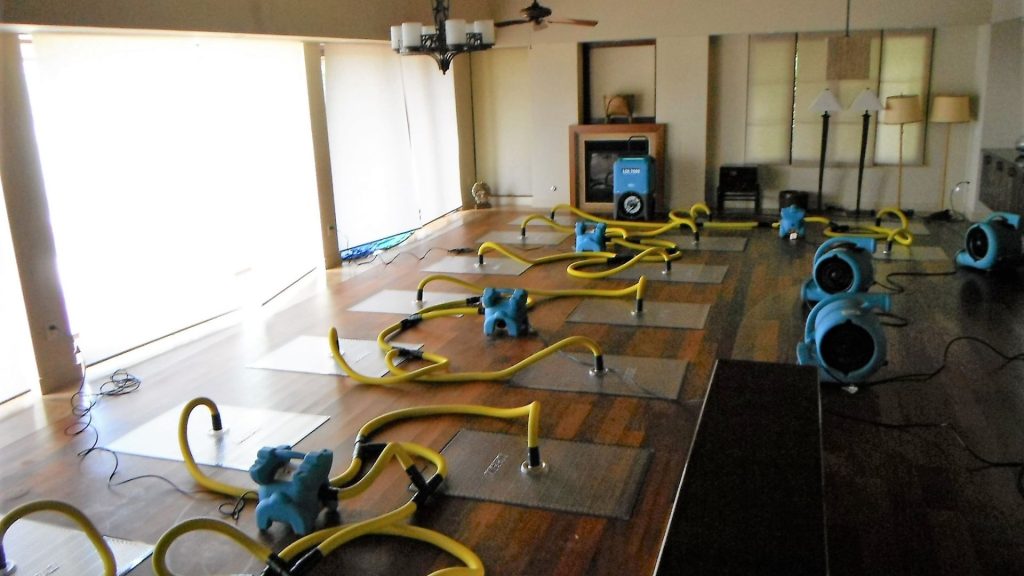
Water damage is often perceived solely as a structural or aesthetic concern, yet the most significant impact often occurs in the air you breathe every day. When moisture enters your home, it triggers a chain reaction that releases airborne contaminants, turning a healthy living space into a compromised environment. Residents living in Commerce Township understand that our regional climate, combined with high water tables, creates unique challenges for maintaining indoor air quality. Whether you are dealing with a basement flood near the Huron River or a leaky roof in a newer subdivision, recognizing the link between excess moisture and health is the first step toward effective water damage restoration in Commerce Township.
Why is professional water damage restoration in Commerce Township essential for your health?
The speed and precision of water damage restoration in Commerce Township are vital because moisture does not remain static. Once water enters your building materials, it begins to evaporate, carrying microscopic particles into the air you circulate throughout your home. This process quickly degrades your indoor air quality by creating a breeding ground for biological growth and chemical off-gassing from building materials.
When water saturates your walls, floors, or insulation, it alters the indoor ecosystem. Drywall, carpets, and wood framing act like sponges, holding onto liquid long enough for mold colonies to establish roots. As these colonies grow, they release spores into the HVAC system, which then distributes them to every room in your house. Addressing these conditions requires specialized equipment to extract the water and neutralize the atmosphere before contaminants become a permanent fixture of your home environment.
How does excess moisture lead to poor indoor air quality?
Excess moisture is the primary catalyst for the degradation of air quality in residential properties. When relative humidity levels within your home exceed sixty percent for an extended period, it promotes the growth of mold, mildew, and bacteria. These organisms do not just grow on surfaces. They release metabolic byproducts and spores that significantly increase the concentration of airborne particles, leading to poor indoor air quality.
Beyond biological growth, water causes chemical changes in building materials. Modern homes are constructed with various adhesives, sealants, and composite woods that are not designed to remain wet. When these materials become saturated, they may release volatile organic compounds (VOCs) that would otherwise remain stable. This chemical reaction adds an invisible layer of pollution to your indoor air, which can cause respiratory irritation, headaches, and allergy-like symptoms for your family.
What role does your HVAC system play in circulating contaminants?
Your HVAC system is intended to filter and circulate air, but it can inadvertently become a distribution network for contaminants after water damage. If your basement or crawl space experiences flooding, the intake vents can pull damp air and spores directly into the blower assembly. Once inside the ductwork, these particles settle on the interior surfaces, where they continue to thrive in the dark, restricted environment.
Over time, every time your furnace or air conditioner cycles on, it pushes these accumulated particles throughout your home. This creates a persistent issue where you might clean your living areas, yet the air remains heavy or musty. In neighborhoods surrounding Dodge Park #5 For areas with naturally high soil moisture, the HVAC system may also be pulling in air from damp crawl spaces, further exacerbating the issue of airborne contaminants from water damage. Professional cleaning and proper dehumidification are often required to clear these systems and return your air to a healthy state.
Why is mold growth the most significant threat to air quality?
Mold is an opportunistic organism that thrives when organic building materials remain wet for longer than forty-four to forty-eight hours. While mold is naturally present in our outdoor environment, it becomes a severe issue when it colonizes indoors in high concentrations. When you see visible signs of mold, it is often only a small fraction of the total colonization, as the majority may be hidden behind wallpaper, inside wall cavities, or beneath floorboards.
These colonies release microscopic spores that are light enough to stay suspended in the air for long periods. These spores are a major trigger for respiratory distress. Even if the mold is dead, the structural parts of the spores remain active allergens. This is why simple surface cleaning is rarely sufficient to restore air quality. You must address the moisture source and physically remove the colonized materials to stop the cycle of spore production.
How do porous materials trap pollutants in your home?
Porous building materials, such as drywall, carpet, insulation, and wood, are designed to regulate moisture to a degree, but they have a breaking point. When these materials reach saturation, they lose their ability to dry out effectively without mechanical intervention. They become reservoirs for stagnant water, which fosters a persistent damp environment that is difficult to fix with simple ventilation or home fans.
If you suspect your home has been compromised by moisture that has moved behind your walls, you should contact us to inspect the integrity of your property before minor issues develop into chronic health hazards that threaten the safety of your indoor environment.
When these materials stay damp, they undergo a process of decay. Wood framing softens, and insulation loses its thermal properties, becoming a soggy mass that can hold contaminants for months. If left unaddressed, this decay releases odors and bacteria into the living space, making your home feel perpetually stale or musty. Replacing these materials is often the only way to eliminate the source of the persistent pollutants that are affecting your air quality.
How can you identify the signs of compromised indoor air quality?
Homeowners are often the first to notice that their air quality has shifted, even if they cannot pinpoint the cause. Sensory cues are highly reliable indicators that your home is suffering from a moisture-related issue. If you notice a change in the way your home smells or feels, you should begin an investigation immediately.
Common signs of poor air quality include:
- A persistent musty or earthy odor that does not vanish after cleaning.
- Visible condensation on interior windows, especially during mild weather.
- Heightened allergy symptoms that seem to worsen when you spend time indoors.
- A feeling of heaviness or dampness in the air inside specific rooms.
- Visible dust or debris accumulation near air registers or vents.
If you encounter these signs, especially in low-lying areas like basements or spaces with concrete slabs, it is critical to assess the moisture levels. High humidity or dampness in a basement can quickly affect the air quality of the entire house due to the stack effect, where air travels upward through the home.
What is the difference between surface dampness and structural moisture?
It is helpful to understand the progression of water damage to identify when it moves from a manageable issue to a threat to your air quality. The following table illustrates the differences between these two stages.
| Feature | Surface Dampness | Structural Moisture Crisis |
| Primary Location | Carpets, rugs, surface dust | Wall cavities, insulation, subflooring |
| Air Quality Impact | Minimal and localized | Significant and systemic |
| Odor Level | Mild or non-existent | Strong, persistent musty smell |
| Remediation Needed | Standard cleaning and drying | Professional extraction and material removal |
| Health Risk | Low | Moderate to high |
How does local geography affect indoor air quality in Commerce Township?
Commerce Township has a unique geological profile that influences how water moves through our environment. Areas near Long Lake or Union Lake often deal with higher water tables, which can push moisture against basement walls through hydrostatic pressure. When this external pressure meets a crack in the foundation, it introduces not just water, but also soil gases, bacteria, and humidity into your home.
Residents living near the Huron River corridor or in older subdivisions with mature landscapes may notice that exterior moisture levels remain high for much of the year. When your soil is consistently saturated, your home’s foundation is under constant stress. If your drainage systems are not optimized to handle this specific regional moisture load, you are more likely to experience basement dampness, which is the leading cause of poor air quality in our local residential areas.
Frequently Asked Questions
Can a dehumidifier fix air quality issues caused by water damage?
A dehumidifier is an excellent tool for maintaining healthy humidity levels, but it cannot solve an active water damage issue. If you have saturated building materials, a dehumidifier will not remove the moisture trapped behind walls or under flooring. It is a maintenance tool for prevention, not a solution for active contamination.
Is it safe to stay in a home with mold caused by water damage?
If you have extensive mold growth or if individuals in the home have respiratory issues, it is often recommended to minimize exposure. Mold spores can aggravate asthma and allergies, and prolonged exposure can cause more severe reactions. It is best to have the area assessed by professionals to determine the severity and the necessary safety protocols.
How quickly does air quality degrade after a pipe burst?
Air quality can begin to decline within twenty-four to forty-eight hours after a water event. Once organic materials become saturated, they begin to release odors and provide a surface for mold spores to germinate. The longer you wait, the more deeply these contaminants settle into your home and HVAC system.
Can I clean the air ducts myself to remove mold?
Professional air duct cleaning requires industrial-grade HEPA filtration and specialized tools to agitate and extract debris from inside the ducts. DIY cleaning methods often fail to reach the entire system and can even spread spores throughout the home if the correct containment procedures are not used.
What is the stack effect and why does it matter?
The stack effect describes how warm air rises and exits through upper levels of a home, pulling in cool air from lower levels like the basement. If your basement has high humidity or mold, the stack effect acts like a chimney, drawing those contaminated air particles upward and distributing them throughout the living floors of your house.
Securing Your Home’s Future
Protecting your home from the unseen effects of moisture is a continuous process that safeguards both your property value and your family health. If you notice signs that water damage has impacted your environment, acting quickly is the most effective way to restore a healthy atmosphere.
EZ Dry provides the professional expertise necessary to identify hidden moisture and eliminate contaminants effectively. We are a trusted local service provider, specializing in water damage restoration in Commerce Township, and we are dedicated to helping homeowners regain the comfort and safety of their living space. When you need reliable support to address moisture challenges and restore your air quality, our team is ready to assist you.