
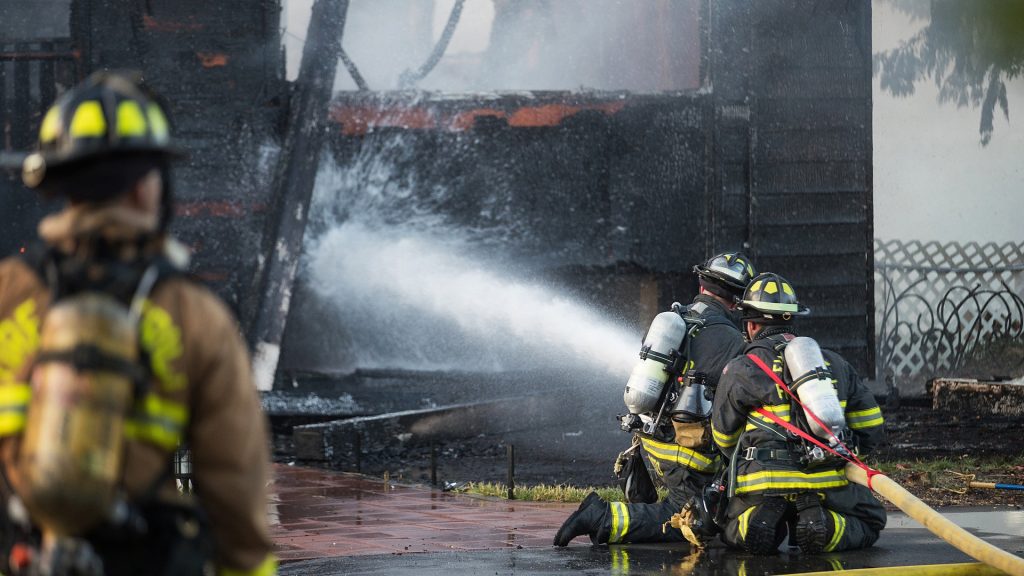
The most disorienting moment of a house fire is not the event itself, but the silence that follows. After the fire trucks have left your driveway and the sirens have faded into the distance of a Michigan night, you are left standing in front of a home that looks nothing like the one you left that morning. The windows may be boarded up, the smell of wet charcoal hangs heavy in the air, and the water used to extinguish the flames is likely pooling in your basement.
In that overwhelming moment, the question that haunts every homeowner is simple yet agonizing: What do I have left?
We often assume that fire destroys everything it touches, turning possessions into ash. While that is true for the items in the direct path of the flames, the reality of fire damage is far more complex. Most of your belongings were likely not touched by fire at all. Instead, they are victims of the three secondary destroyers: smoke, extreme heat, and water.
For Michigan homeowners, this assessment is even more complicated. If a fire occurs in January, the thousands of gallons of water used by firefighters might have frozen, encasing your furniture in ice. If it happens during a humid Detroit July, that same water is already jumpstarting a mold colony before the smoke has even cleared.
Deciding what to keep and what to toss is not just about sentimentality; it is a strict matter of safety, chemistry, and health. Some items that look perfectly fine are actually toxic hazards, while some items that look ruined can be fully restored to their pre-loss condition. This guide will walk you through the science of salvageability, helping you make the difficult decisions necessary to rebuild your life safely.
Understanding the Enemy: Why “Clean” Isn’t Always Safe
To understand why you have to throw away a seemingly untouched box of cereal or a pristine-looking mattress, you first have to understand the nature of smoke. Smoke is not just gray air; it is a complex cocktail of particles, chemicals, and gases produced by incomplete combustion.
When materials in your home burn—synthetic carpets, foam cushions, plastic toys, wood framing—they release microscopic particles coated in hazardous chemicals. These particles are often smaller than a red blood cell. They don’t just land on surfaces; they penetrate them. They are driven by heat and pressure into the pores of your drywall, the fibers of your clothes, and the internal mechanisms of your electronics.
Furthermore, soot is acidic. When the plastics in your home burn, they release chlorides and sulfides. When these mix with the humidity in the air (or the water from the fire hoses), they create acid. This acid begins to eat away at metal, glass, and plastics within minutes of the fire being extinguished. This is why a “wait and see” approach is the most destructive choice you can make. The longer items sit in a smoke-damaged house, the more they degrade.
The Non-Negotiables: Items You Must Discard
There are certain categories of items where the risk to your health simply outweighs any financial or sentimental value. No amount of professional cleaning can guarantee these items are safe to use again. In the restoration industry, we consider these “non-salvageable.”
Food, Beverages, and Perishables
This is the hardest rule for many people to follow because it feels wasteful, but it is the most critical. You must discard all non-perishable food that was in the home during the fire, even if it was stored in cupboards or the pantry.
Heat causes air in jars and cans to expand. Even if a can of soup didn’t explode, the heat may have compromised the seal just enough to let microscopic bacteria enter, or to allow the chemical lining of the can to leach into the food. Boxed foods like cereal, pasta, and crackers are even more vulnerable. The cardboard packaging is porous. Smoke fumes can penetrate the box and contaminate the food inside with carcinogens, even if the inner plastic bag looks sealed.
If you have a refrigerator or freezer that lost power, the food inside is likely spoiled. But even if the power stayed on, the refrigerator seal is not airtight against smoke fumes. The insulation in the fridge walls may have absorbed odors that will taint food for years. In almost every fire scenario, the contents of your kitchen cupboards and refrigerator should be considered a total loss.
Medicines and Cosmetics
Open your medicine cabinet. If you see soot on the shelves, you must assume the contents are compromised. The heat from a fire can alter the chemical composition of prescription drugs, rendering them ineffective or even dangerous. Creams, lotions, and makeup are particularly absorbent. When smoke particles land on a lipstick or a jar of face cream, they mix with the oils in the product. You cannot wash smoke out of a liquid or a cream. Applying these products to your skin later can cause rashes, irritation, or chemical burns.
Mattresses and Pillows
This is often a significant financial blow, as mattresses are expensive, but they are rarely salvageable. A mattress is essentially a giant sponge. The fabric ticking and the foam layers underneath are designed to breathe, which means they are also designed to inhale smoke.
During a fire, the air pressure drives soot deep into the core of the mattress. Professional steam cleaning only cleans the surface; it cannot reach the center where the carcinogenic particles are trapped. Every time you lie on that mattress in the future, you would be compressing the foam and puffing those particles back out into the air you breathe while you sleep. For the safety of your family, mattresses and pillows exposed to active smoke must be discarded.
The Gray Area: Electronics and Appliances
Modern homes are filled with sensitive electronics, from large flat-screen TVs to laptops and smart appliances. The fate of these items depends heavily on two factors: heat exposure and immediate action.
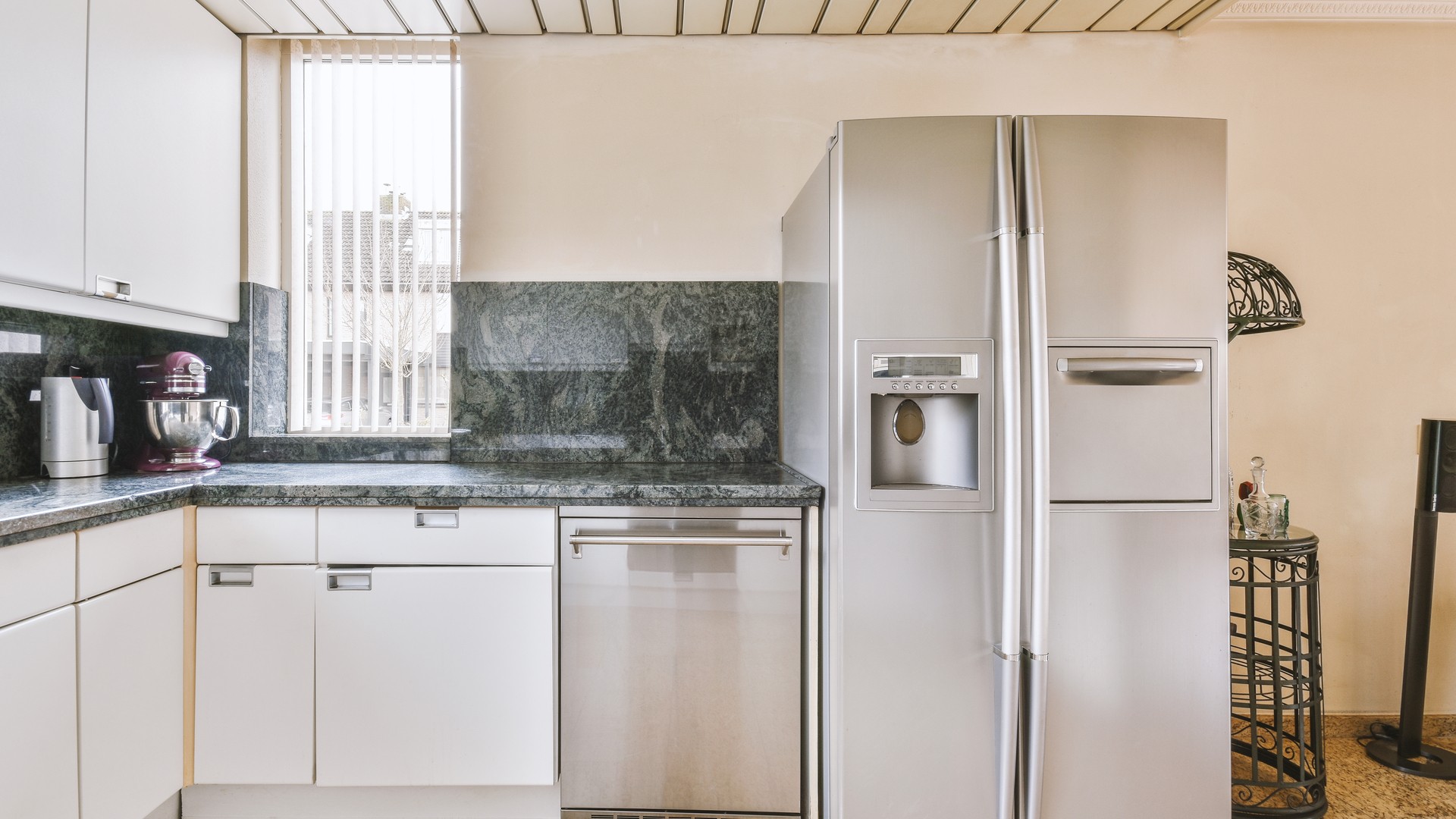
Electronics generate their own heat, so they have fans to pull air in for cooling. During a fire, a running computer or refrigerator is actively sucking smoke and soot into its internal components. The soot produced by burning plastic is highly acidic. If this acidic soot lands on the copper contacts or circuit boards inside your TV, it will begin to corrode the metal. This corrosion acts like a slow-moving cancer for electronics. You might plug the TV in a week later and it works fine, but a month later it creates a short circuit and fails—or worse, starts a new fire.
However, electronics are not automatically trash. If they were not exposed to extreme heat (which melts the casing), they can often be saved by professional restoration. This involves opening the casing and cleaning the internal boards with specialized de-ionized solutions before the acid corrosion sets in. If your computer contains vital data, it is almost always possible to retrieve the hard drive and clean it, even if the rest of the machine is a loss.
The “Save” List: Items That Respond Well to Restoration
The good news is that a vast majority of your household contents can be saved, provided you use the right techniques. Professional restoration companies like EzDry utilize technology that is far superior to standard dry cleaning or household scrubbing.
Clothing and Textiles
You should not attempt to wash smoke-damaged clothes in your own washing machine. Standard detergents are not formulated to break down the oily residue of soot, and the agitation of the washer can actually grind the soot deeper into the fabric fibers. Furthermore, your home dryer can “set” the smoke odor permanently, making it impossible to remove.
However, professional restoration dry cleaners use ozone chambers and hydroxyl generators. These machines use gas to break apart the molecular bonds of the smoke odor. They don’t just mask the smell; they eliminate it. We can successfully restore heavy winter coats, delicate silk curtains, leather jackets, and sentimental quilts. Even stuffed animals, which seem like they would fall into the “mattress” category, can often be saved through specialized freeze-drying and ozone treatments that sanitize the stuffing without destroying the toy.
Hardwood Furniture
Wood is resilient. Even if a beloved antique dresser looks black and ruined, it is often just the finish that is damaged. The layer of varnish or polyurethane on wood furniture acts as a sacrificial shield. The smoke and soot sit on top of this finish.
Restoration experts can use specialized wood soaps to remove the soot. If the heat has blistered the finish, the piece can be stripped, sanded, and refinished. As long as the fire did not char the wood structure itself, solid wood furniture is one of the most salvageable categories in a home.
Non-Porous Items: Glass, Crystal, and China
Your grandmother’s china set or your crystal stemware may look devastated, covered in a thick layer of oily black sludge. But underneath that grime, the material is non-porous. Glass and glazed ceramics do not absorb smoke.
The danger here is time. As mentioned earlier, soot is acidic. If left to sit on silver or crystal for weeks, it will etch the surface, causing permanent pitting or cloudiness. But if these items are packed out and cleaned quickly in an ultrasonic cleaning station (which uses sound waves to vibrate dirt off surfaces), they can be returned to you in pristine condition.
The Michigan Factor: Winter Fires and Freeze Damage
In Michigan, we face a unique variable that complicates the “keep or toss” decision: the weather. Winter fires are statistically more common here due to space heaters and overworked furnaces. When firefighters battle a blaze in February, they are introducing water into a freezing environment.
It is not uncommon for us to enter a home after a fire and find several inches of ice on the floor. Furniture may be frozen to the carpet. Clothing in closets may be frozen into solid blocks.
Freezing actually has a preservation effect on some items. It stops mold growth dead in its tracks and prevents ink from running on documents. However, it can destroy others. If water got inside the laminate of a cheap particle-board desk and then froze, the expansion of the ice will shatter the glue bonds, rendering the furniture useless.
The most critical advice for a winter fire in Michigan is to keep the heat on if safe, or if the utilities are cut, to move sensitive items out immediately. If wet pipes in the walls freeze and burst days after the fire, you are dealing with a secondary flood on top of the fire damage. This is why professional “pack-out” services are vital. We move your salvageable items to a climate-controlled warehouse immediately, getting them out of the freezing, wet environment of the damaged home.
Documents, Photographs, and Books
Few things carry more emotional weight than family photo albums, birth certificates, and old letters. Paper is incredibly fragile when wet and smoky. If you try to separate wet pages, they will tear. If you let them dry naturally, they will mold or stick together in a solid brick.
Do not throw these away. Paper restoration is one of the most miraculous parts of our industry. We use a process called vacuum freeze-drying—the same technology used to preserve food. We freeze the wet documents and then lower the air pressure. This causes the ice in the paper to turn directly into vapor, bypassing the liquid stage. This allows us to dry books and photos without the pages sticking together or ink running. Even charred edges can be trimmed. If you find a wet, smoky box of photos, leave them wet, wrap them in plastic to keep them moist (counter-intuitively), and hand them to a restoration specialist immediately.
The Psychological Toll of “Stuff”
There is a psychological component to this process that cannot be ignored. After a fire, you may feel an intense urge to throw everything away and start fresh. The smell of the smoke can trigger trauma, and you might feel that you never want to see those clothes again. Conversely, you might feel a desperate need to hoard everything, even burnt trash, because you feel you have lost so much already.
Both reactions are normal. This is why working with a third-party restoration team is helpful. We act as the objective voice. We can look at a charred item and honestly tell you, “We can clean this, but it will cost more to clean than to replace,” or “This looks bad, but it’s actually an easy fix.”
We also handle the documentation. For every item you toss, you need to prove its value to your insurance adjuster. You cannot simply throw a burnt sofa in a dumpster and expect to get paid for it. It needs to be photographed, listed on an inventory sheet, and declared a total loss. Restoration companies manage this inventory process, ensuring you get the maximum replacement value for the items that cannot be saved.
Conclusion: Restoration is Possible
Walking through the wreckage of a fire is one of the darkest moments a homeowner can face. The pile of debris seems insurmountable. But amidst the ash and the water, there is hope.
Modern restoration technology allows us to save far more than we could twenty years ago. We can pull smoke out of silk, scrub soot off of oil paintings, and freeze-dry your wedding album back to life. The key is speed and expertise. The clock is ticking from the moment the fire is out. The acidity of the soot and the growth of mold wait for no one.
If you are standing in the ashes trying to decide what to keep and what to toss, you don’t have to make those choices alone. At EzDry Water Mitigation & Property Restoration, we know the science of materials. We know how Michigan winters affect fire damage. And most importantly, we know that we aren’t just cleaning “things”—we are saving the physical pieces of your life.
Don’t let the fire take more than it has to. Reach out to a certified Michigan restoration professional today and start the journey of turning a house back into a home.