
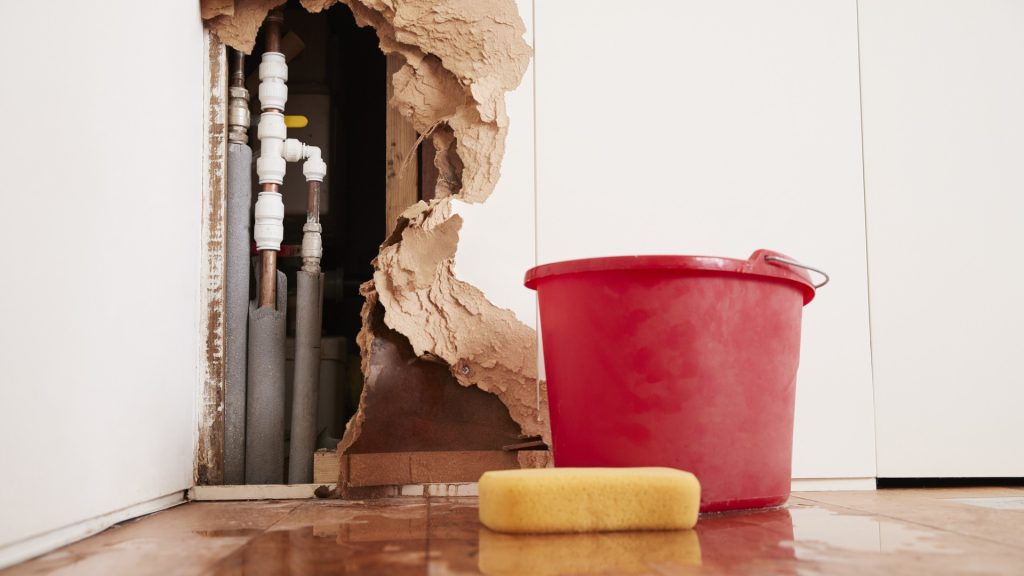
Most people picture water damage as something dramatic. A river flooding its banks. A massive storm tearing shingles off the roof. A tree crashing through a window during a thunderstorm.
Those things happen. But they are not what keeps our phones ringing.
The most common source of water damage we see in Michigan homes is plumbing failure. Burst pipes, leaking supply lines, failed water heaters, and worn-out appliance connections cause more damage to Michigan homes than any weather event. Nationally, plumbing supply system failures account for nearly half of all water damage incidents, according to data from the Insurance Institute for Business and Home Safety. In Michigan, where freezing temperatures put enormous stress on pipes for months at a time, that number is even more relevant.
Water damage from plumbing failures is so common in part because it is so easy to miss until the damage is already significant. A slow leak behind a wall can go undetected for weeks. A burst pipe in an unoccupied room can release hundreds of gallons before anyone notices. And when it happens in the middle of a Michigan winter, the combination of water and cold makes everything worse.
Frozen and Burst Pipes: Michigan’s Biggest Culprit
If there is one water damage scenario that defines Michigan, it is the frozen pipe.
The Michigan Committee for Severe Weather Awareness estimates that approximately 250,000 homes are damaged each winter due to frozen water pipes. That is a staggering number, and it reflects just how vulnerable Michigan’s housing stock is during the colder months.
Here is how it works. When temperatures drop below freezing, the water inside your pipes can begin to solidify. As water freezes, it expands by about nine percent. That expansion creates intense pressure inside the pipe, particularly when ice forms a blockage and traps liquid water between the ice and a closed valve or faucet.
The pipe does not always burst at the point where the ice forms. It often ruptures somewhere between the blockage and the faucet, where the pressure builds to a level the pipe wall cannot withstand. An eighth-inch crack in a pipe can release up to 250 gallons of water per day. That is enough to destroy flooring, saturate drywall, ruin furniture, and create conditions for mold growth in a very short time.
Both copper and PVC pipes can burst. Neither material is immune to the forces that freezing water creates. And in Michigan, where winter temperatures regularly drop below zero in the Upper Peninsula and can stay below freezing for days or weeks at a time in the Lower Peninsula, the risk is present from November through March and sometimes longer.
The areas of a home most vulnerable to frozen pipes are the ones with the least protection from the cold. Pipes running through exterior walls, especially in older homes with limited insulation, are among the most common failure points. Crawl spaces and unheated basements are frequent trouble spots. Attics, garages, and areas near rim joists where the foundation meets the framing are all high-risk zones.
Older Michigan homes are particularly vulnerable. Many homes built before the 1970s have plumbing routed through exterior walls or uninsulated spaces that would not meet current building standards. The pipes themselves may also be aging, with corrosion or weakened joints that make them more susceptible to bursting under pressure.
The Damage Happens Fast
One of the reasons plumbing failures cause so much destruction is speed. A burst pipe does not wait for you to notice it.
If a supply line ruptures while you are at work, water can flow for eight or ten hours before you walk through the door. If it happens while you are on vacation or away for the weekend, the damage can be catastrophic. We have responded to homes where a single burst pipe flooded an entire finished basement, soaked through subfloor layers, traveled down walls to lower levels, and destroyed personal property worth tens of thousands of dollars.
Water follows gravity and finds every gap, seam, and opening in your home’s structure. It seeps behind baseboards, wicks up through drywall, pools under flooring, and saturates insulation inside wall cavities. Within 24 to 48 hours, mold can begin to grow in any area that remains damp. In Michigan’s humid summer months, that timeline can be even shorter.
The damage is not always visible from the surface. A ceiling stain might indicate that water has been traveling through the floor joists above for days. Buckled laminate flooring might mean the subfloor beneath is completely saturated. This is why professional water damage assessment involves moisture meters, thermal imaging, and careful inspection of areas that look dry but may not be.
Other Common Plumbing Failures
Frozen pipes get the most attention in Michigan, but they are not the only plumbing-related source of water damage we see regularly.
Water heater failures. The average water heater has a lifespan of about 8 to 12 years. As they age, the tank can corrode from the inside, and the pressure relief valve or supply connections can weaken. When a water heater fails, it can release 40 to 80 gallons of water at once, depending on the tank size. If it is in a finished basement or on an upper floor, the damage spreads quickly. Many Michigan homes have their water heater in the basement, which means a failure can flood the lowest level of the home before anyone realizes what happened.
Washing machine hoses. The rubber supply hoses that connect your washing machine to the water supply are under constant pressure. Over time, they become brittle and develop cracks. Industry data suggests these hoses typically fail after about 8 to 9 years, though many homeowners never replace them. When a washing machine hose bursts, water flows at full supply pressure, and laundry rooms are often in basements or interior rooms where the leak may not be noticed immediately.
Dishwasher and refrigerator supply lines. The small water lines that feed your dishwasher and refrigerator ice maker are easy to forget about. They can kink, crack, or come loose from their connections. A slow drip behind the refrigerator can damage flooring and cabinetry for weeks before it becomes visible. A sudden failure can flood the kitchen in minutes.
Toilet supply lines and wax ring failures. The supply line running to your toilet and the wax ring that seals the toilet base to the floor are both common failure points. A failed wax ring allows water to seep under the toilet with every flush, slowly damaging the subfloor. A burst supply line can send water across the bathroom floor and into adjacent rooms.
Hidden slab leaks and pinhole leaks. Some Michigan homes, particularly those with copper plumbing, develop pinhole leaks caused by corrosion over time. These leaks are small enough that they may not produce obvious dripping. Instead, they create slow, persistent moisture inside walls or under floors. By the time a homeowner notices a stain or a musty smell, the damage behind the surface can be extensive.
What to Do When You Find Water
If you discover water damage from a plumbing failure in your Michigan home, your first priority is stopping the flow.
Locate your main water shutoff valve and close it. Every member of your household should know where this valve is and how to operate it. In most Michigan homes, the main shutoff is in the basement, near where the water supply enters the house. Closing this valve stops all water flow to the home and prevents additional damage.
If the water is near electrical outlets, appliances, or your electrical panel, do not wade into it. Shut off the electricity at the breaker box if you can do so safely. If you cannot reach the panel without stepping in water, wait for a professional.
Once the water is stopped, document the damage before you start cleaning up. Take photos and video of every affected area, including damaged walls, flooring, belongings, and the source of the leak if visible. This documentation supports your insurance claim.
Then call a professional restoration company. Water damage that goes beyond a small, contained spill requires equipment that most homeowners do not have. Industrial extractors, commercial dehumidifiers, high-velocity air movers, and moisture detection tools are all necessary for proper mitigation. The goal is not just removing the visible water. It is drying the structure completely to prevent mold growth and secondary damage.
What Michigan Homeowners Insurance Typically Covers
Most standard homeowners insurance policies in Michigan cover water damage that is sudden and accidental. A pipe that bursts unexpectedly, a water heater that fails without warning, or a washing machine hose that ruptures during a cycle would generally fall under covered losses.
What insurance typically does not cover is damage caused by neglect, lack of maintenance, or gradual deterioration. If a pipe has been leaking slowly for months and the homeowner failed to address it, the insurer may deny the claim on the grounds that the damage was preventable. Similarly, if a homeowner leaves for vacation during a cold snap and shuts off the heat, resulting in frozen and burst pipes, the insurer may argue that the homeowner failed to take reasonable precautions.
Michigan policies also generally exclude flood damage from external sources, sewer backup (unless you have purchased a separate endorsement), and damage from groundwater seepage. These are common coverage gaps that surprise homeowners after a loss.
The insurance company will typically cover the cost of repairing damage caused by the water, including drywall, flooring, cabinetry, and personal property. However, the cost of repairing or replacing the pipe or appliance that failed is usually not covered, as it is considered a maintenance expense.
If you have questions about your specific coverage, the Michigan Department of Insurance and Financial Services (DIFS) can help. You can reach them at 1-877-999-6442 or visit michigan.gov/DIFS.
How to Reduce Your Risk
You cannot eliminate the risk of plumbing failure entirely, but you can take practical steps to reduce it significantly.
Insulate exposed pipes. Pipes in crawl spaces, attics, garages, and exterior walls should be wrapped with foam pipe insulation. This is inexpensive and one of the most effective ways to prevent frozen pipes in a Michigan winter. The Michigan Department of State Police recommends insulating these areas as a primary prevention measure.
Keep your home heated. Even if you are away during the winter, keep your thermostat set to at least 55 degrees Fahrenheit. This maintains enough warmth in the walls and floors to prevent pipes from freezing. If you plan to be away for an extended period, consider having someone check on the house regularly or installing a smart thermostat with temperature alerts.
Let faucets drip during extreme cold. When temperatures drop well below freezing, opening a faucet to a slow drip keeps water moving through the pipes. Moving water is significantly harder to freeze than standing water. Focus on faucets connected to pipes that run through exterior walls or unheated spaces.
Replace old supply hoses. Swap out rubber washing machine hoses for braided stainless steel hoses, which are far more durable. Check the supply lines to your dishwasher, refrigerator, and toilets annually and replace any that show signs of wear, cracking, or corrosion.
Know the age of your water heater. If your water heater is more than 10 years old, have it inspected by a licensed plumber. Look for signs of rust at the base, moisture around fittings, or a relief valve that drips. Replacing an aging water heater before it fails is far less expensive than dealing with the water damage after it does.
Install water leak detectors. Small battery-operated sensors placed near your water heater, washing machine, sump pump, and under sinks can alert you to leaks before they become major problems. Some smart home systems can even shut off the water supply automatically if a leak is detected.
Call EzDry
At EzDry, plumbing-related water damage is the most common call we get. Our IICRC-certified technicians respond 24/7 across Michigan with the equipment and training to extract water, dry your home thoroughly, and restore the damage from start to finish. We also work directly with your insurance company to document the loss and coordinate the claims process.
If water is in your home right now, turn off the main shutoff valve and call us at (248) 788-6422. The faster we get there, the less damage your home sustains.